
What is Music Publishing, Explained: Part 3

Summary

Publishing royalties come from three sources: performance, mechanical, and sync. A distributor only handles the recording side, not these. A music publisher or publishing administrator registers your songs and collects all three on your behalf, worldwide.

A closeup of L.Dre's face with a plant visible behind him

Music publishing is the foundation of how songwriters, artists, and composers earn revenue from their songs. Whether through streaming, radio play, television, or sync licensing, music publishers ensure that creators collect the publishing royalties they are owed. Without proper publishing administration, many artists miss out on significant income.

Publishing royalties come from multiple sources, including performance rights, mechanical royalties, and sync fees. Music publishers help artists navigate these revenue streams, ensuring they receive every cent they are entitled to. If you're an artist or songwriter looking to establish your own publishing company, understanding the business aspects of publishing is crucial.

The Two Core Copyrights in Music

Music copyrights are divided into two main categories:

  1. Composition Rights: The rights to the written music, including lyrics and melodies.

  2. Master Recording Rights: The rights to a specific sound recording of a song.

Each generates its own stream of royalties. If a song is played on YouTube or a streaming playlist, the master rights generate royalties for the recording owner, while the composition rights generate publishing royalties for the songwriter and music publisher. This distinction is crucial for artists aiming to collect all the income they are owed.

What Are the Three Main Types of Music Publishing Royalties?

1. Performance Royalties

Whenever a song is publicly performed on radio, television, in a club, or even in a live concert, performance royalties are generated. These royalties are collected by Performing Rights Organizations (PROs) like BMI, ASCAP, and global equivalents. Music publishers ensure that songwriters and composers receive these royalties worldwide.

2. Mechanical Royalties
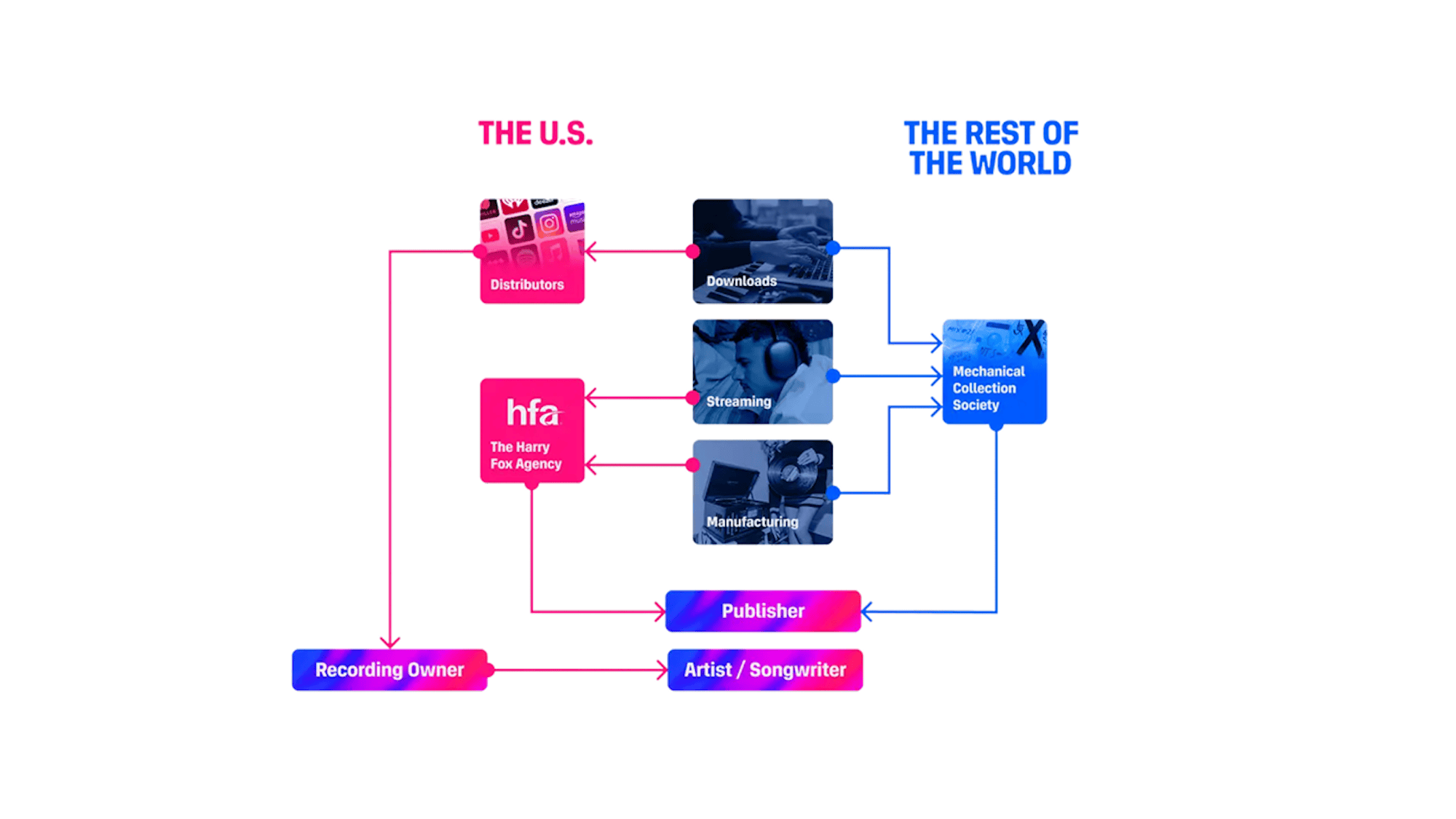
This applies to both your own recordings and covers of your songs.

Mechanical royalties originate from the reproduction and distribution of songs. This includes digital downloads, streaming, and printed music sales. Organizations like the Mechanical Licensing Collective (MLC) help collect these royalties, but a dedicated publishing company ensures that every payment is accounted for.

3. Sync Licensing Fees

Sync licensing occurs when a song is licensed for use in media such as films, television shows, video games, or advertisements. Music publishers negotiate these deals and collect the licensing fees, providing an additional revenue stream for artists and songwriters.

Cover Song Royalties: Do Artists Earn When Others Cover Their Songs?

Yes! When an artist covers another songwriter’s song, the original songwriter continues to earn publishing royalties. For example, when Luke Combs covered Tracy Chapman’s Fast Car, Chapman collected significant publishing royalties from digital streams, radio play, and other sources.

KOSIGN found royalties from tracks I registered 5 years ago.

Avara

If you are a songwriter and someone covers your song, you are still entitled to mechanical and performance royalties. This highlights the importance of having a music publisher to ensure these royalties are properly collected on your behalf.